Definition and Overview
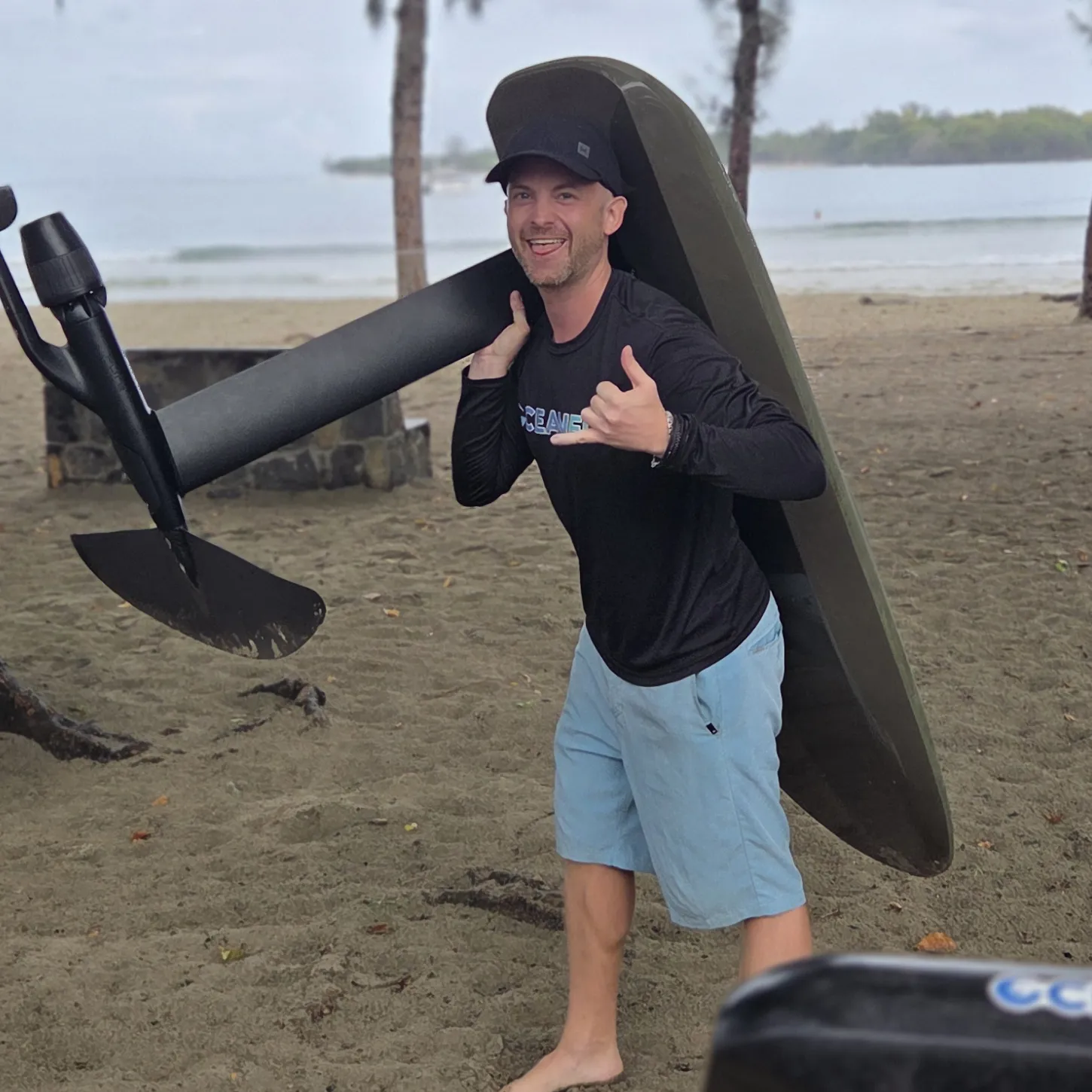
An eFoil (short for electric foil) is a battery-powered hydrofoil surfboard that lifts its rider above the water’s surface. It combines a buoyant board, a submerged hydrofoil wing mounted on a vertical mast, an electric motor, a lithium-ion battery, and a wireless hand controller into a single self-propelled watercraft.
Unlike traditional surfboards, an eFoil requires no waves. Unlike jet skis, it produces no combustion exhaust and near-zero wake. Unlike wind-dependent foilboards used in kitesurfing or wingsurfing, it operates in any conditions: flat lakes, sheltered bays, open ocean, rivers. The rider controls speed via a Bluetooth-connected handheld trigger, and once the board reaches sufficient velocity, the hydrofoil wing generates lift, raising the entire assembly 40 to 80 cm above the water.
It feels like flying. The board is nearly silent once foiling, and the wake is thin — mast and foil, not a hull.
History and Development
Early Hydrofoil Concepts
The principle of using submerged wings to lift a vessel out of the water dates to the 19th century. Early hydrofoil experiments were conducted in England as far back as 1861 (The Canadian Encyclopedia: Hydrofoil).
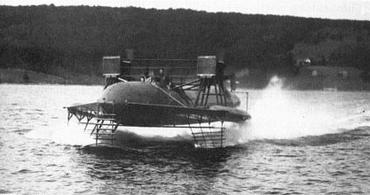
Credits: Credits: The Canadian Encyclopedia
The most notable early milestone came from Alexander Graham Bell. Working with engineer F.W. “Casey” Baldwin at his Beinn Bhreagh estate in Nova Scotia, Bell began hydrofoil experiments in 1908. Their fourth design, the HD-4, set a world marine speed record of 70.86 mph (114.04 km/h) on September 9, 1919, faster than any steamship of its era. That record stood for approximately a decade (Smithsonian National Museum of American History).
Through the mid-20th century, hydrofoil technology was developed primarily for military and commercial passenger vessels. The Soviet Union, Italy, and the United States all operated hydrofoil patrol boats or ferry services. These vessels demonstrated that lifting a hull out of the water dramatically reduced drag and improved speed and fuel efficiency.
From Foilboards to Electric Hydrofoils
By the 2000s, hydrofoil technology had migrated into recreational water sports. Tow foiling (riding a hydrofoil board behind a boat) and kite foiling became established disciplines. These sports proved that a single rider on a compact board could sustain stable, controlled hydrofoil flight at relatively low speeds.
The conceptual leap to an electric hydrofoil came from combining advances in three technologies that had matured rapidly in the 2010s: high-energy-density lithium-ion batteries (driven by the electric vehicle industry), compact brushless electric motors (advanced by the drone industry), and low-power wireless communication (Bluetooth from the smartphone industry).
In 2009, Professor Jacob Kuttenkeuler and a group of students at the KTH Royal Institute of Technology in Stockholm built what is considered the first electric hydrofoil board, as part of a project called EVOLO. Their prototype was a weight-shift-controlled board ridden in a kneeling position (Fliteboard: About Us).
Lift Foils, founded in 2010 in Puerto Rico by Nick Leason, began as a hydrofoil surfboard company. By 2013, Leason had conceived the idea of adding electric propulsion to a foilboard. After years of development, Lift launched the first commercially available eFoil in 2018 (Lift Foils: About).
That same year, Fliteboard entered the market. Founded by David Trewern, a former kite-surfing world record holder and serial entrepreneur, Fliteboard was conceived in 2016 in Byron Bay, Australia. Trewern’s background in design and technology led to a product emphasis on integrated engineering, with the motor positioned in-line with the front wing rather than on the mast above it. Fliteboard shipped its first units in the second half of 2018 and was later acquired by Brunswick Corporation in 2023 (Fliteboard: About Us).
Market Growth
The global eFoil market has expanded rapidly since 2018. Adoption accelerated post-2018, with thousands of units shipped globally. Lift Foils alone reported over 20,000 units sold worldwide by mid-2024 (Lift Foils LinkedIn).
Industry estimates for the global electric hydrofoil surfboard market vary but indicate strong growth:
- 2024/2025 estimates: USD 287 million to USD 486 million, depending on scope and methodology (Cognitive Market Research, Fact.MR)
- 2033 to 2035 projections: USD 1.12 billion to USD 2.5 billion, with compound annual growth rates (CAGR) of 5.8% to 12.6% (MarketIntelo, Fact.MR)
Europe and North America are the largest markets today; Asia-Pacific is growing fastest in most reports. Most units go to recreational riders. The main brands are Lift Foils (USA), Fliteboard (Australia), and Waydoo (China) (Strategic Market Research).
Note: Discrepancies between market reports reflect different scopes (surfboards vs. broader powered boards) and methodologies.
How an eFoil Works
Core Components
A complete eFoil system consists of seven primary components:
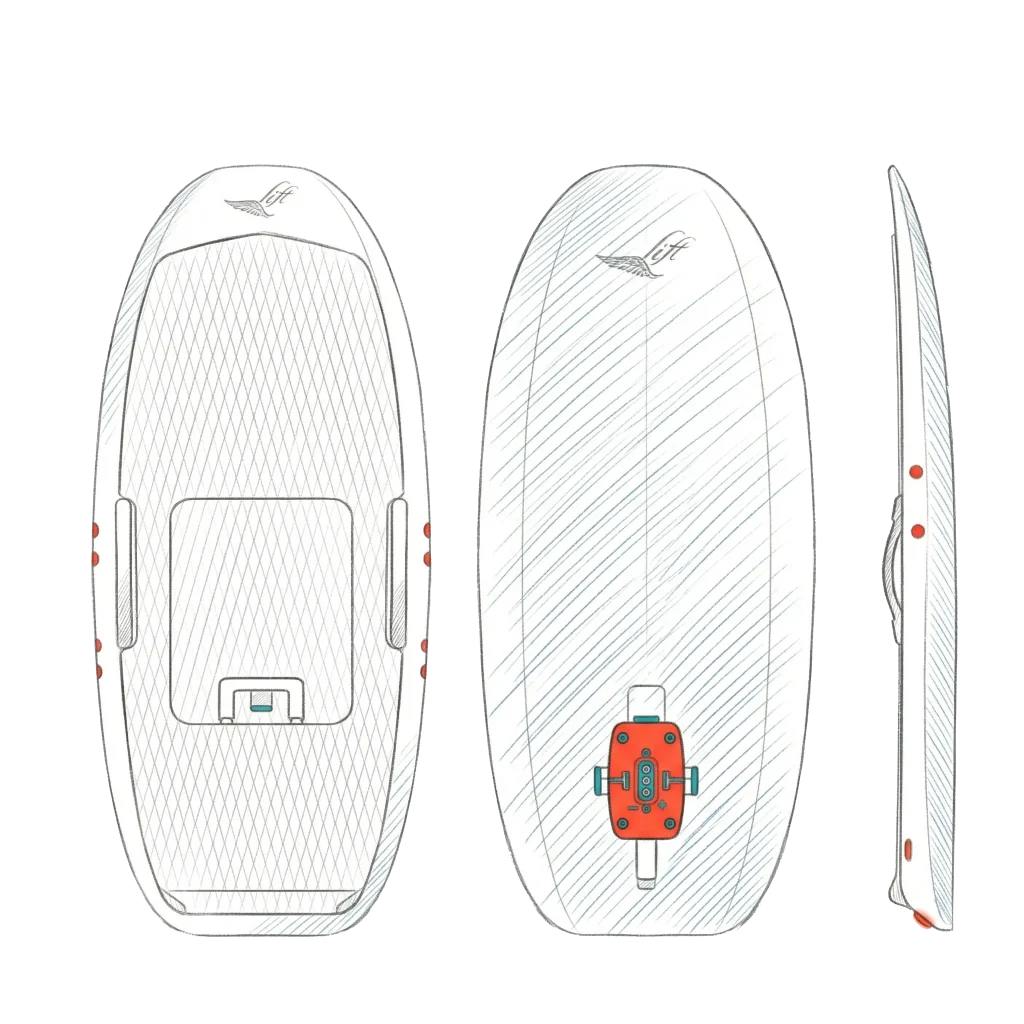
Board. The platform the rider stands on. Boards range from 120 cm to 180+ cm in length and 40 to 130+ litres in volume. They are constructed from carbon fiber, fiberglass, or a rigid-core inflatable design.
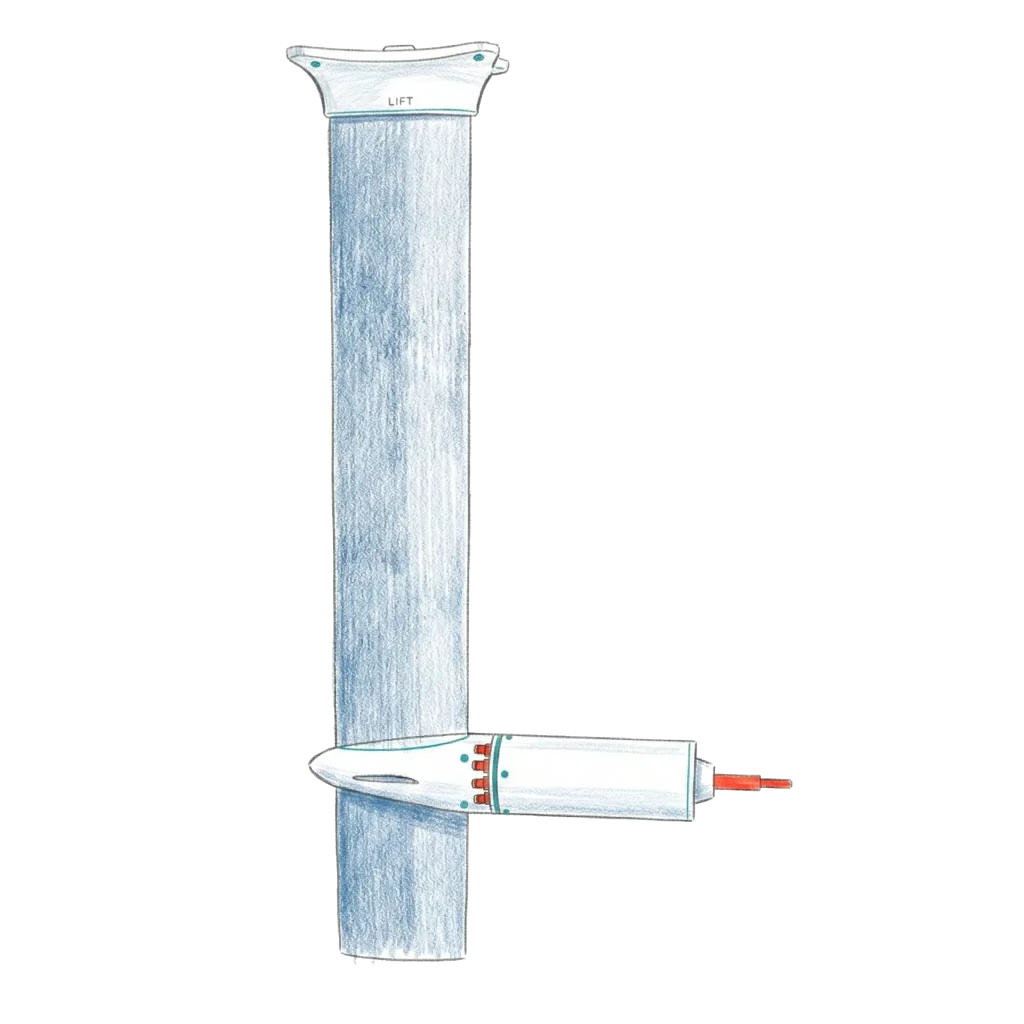
Mast. A vertical strut, typically 65 to 85 cm long, that connects the board to the underwater foil assembly. Masts are made from aluminum or carbon fiber.
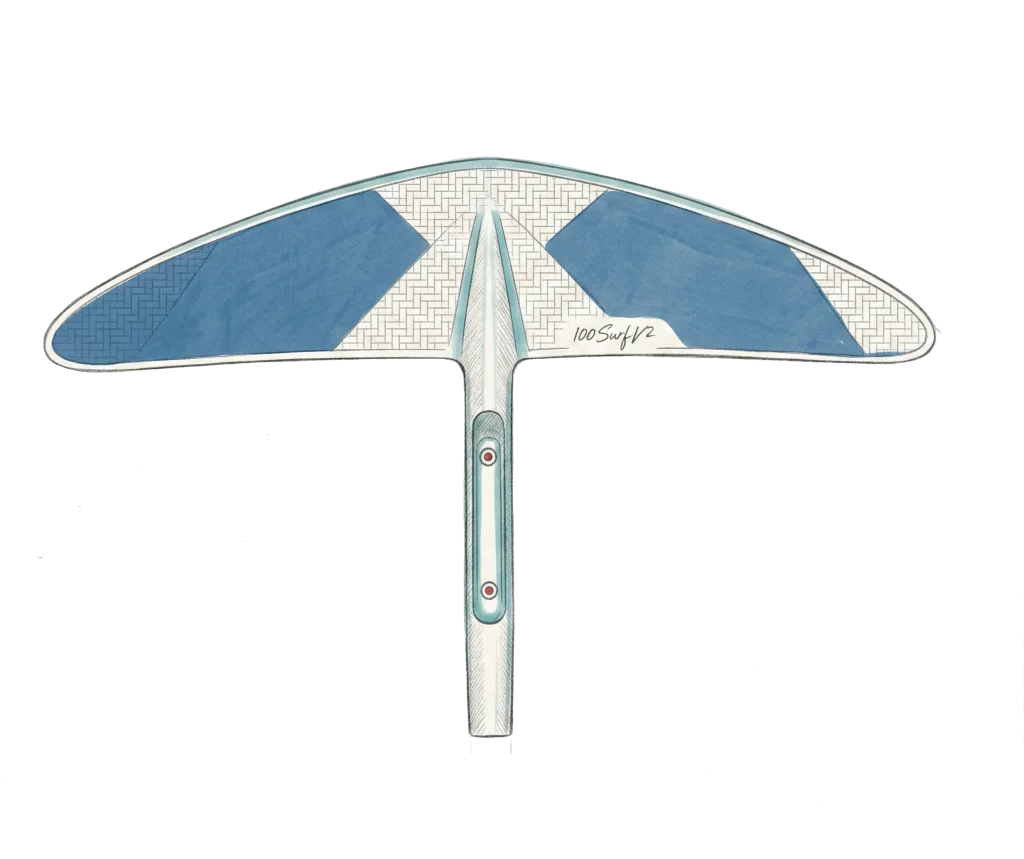
Front wing (main foil). A hydrofoil wing mounted at the base of the mast. This is the primary lift-generating surface. Wing spans typically range from 40 cm to 80+ cm, with larger wings providing more lift at lower speeds (suited to beginners) and smaller wings enabling higher speeds and tighter turns (suited to advanced riders).
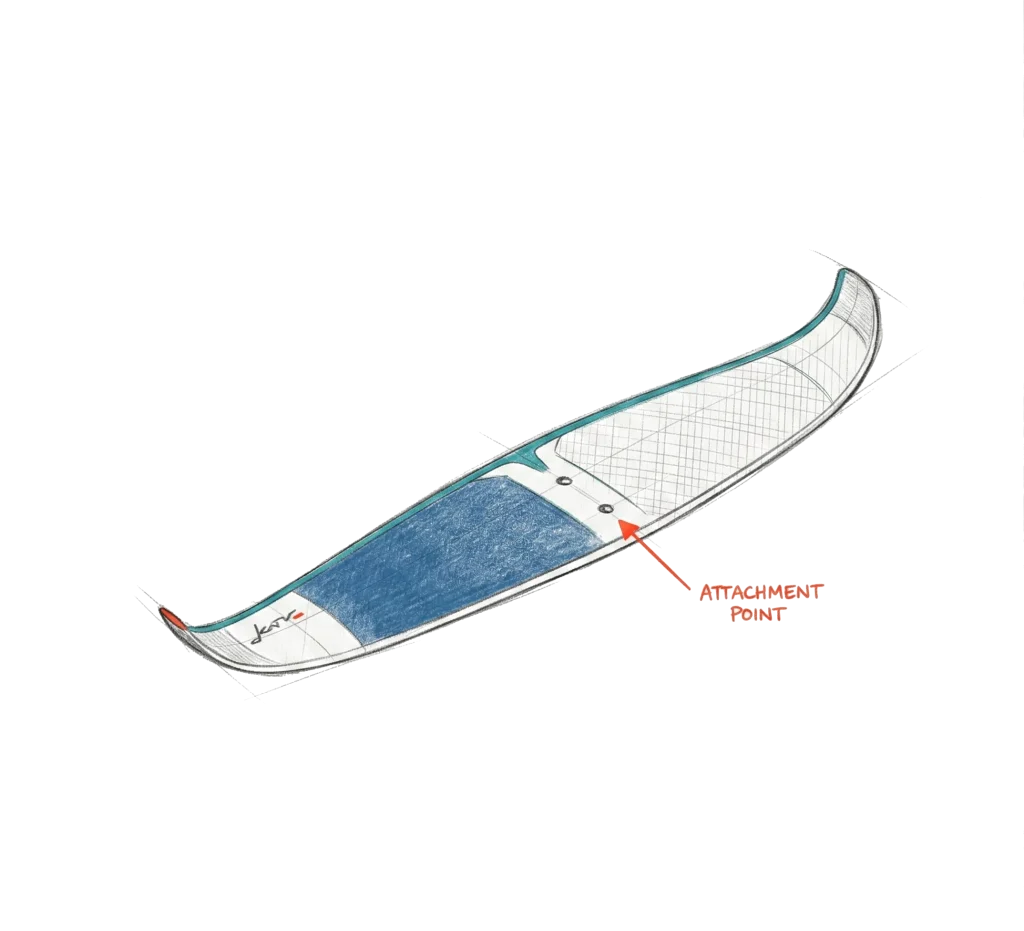
Stabilizer wing (rear wing). A smaller wing mounted behind the front wing on a fuselage. It provides pitch stability, functioning similarly to the horizontal stabilizer on an aircraft.
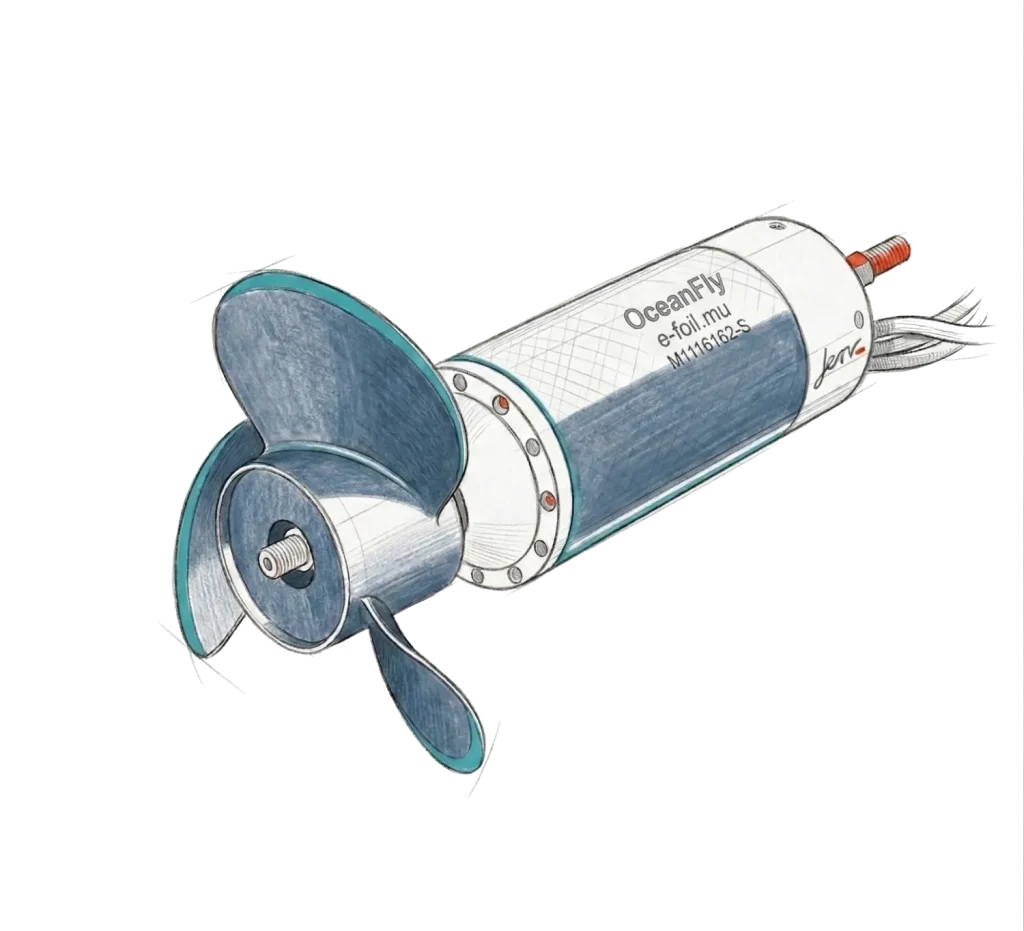
Motor. A brushless electric motor, either direct-drive or geared, positioned on the mast or integrated into the fuselage near the front wing. Motors are sealed against saltwater intrusion and typically produce 3 to 5 kW of continuous power.
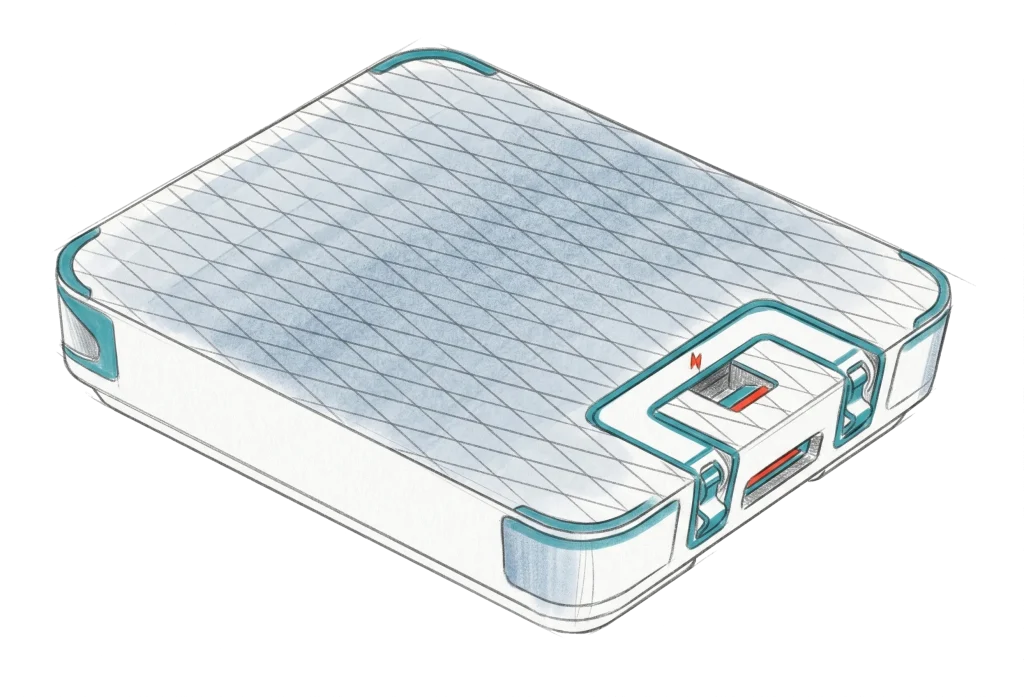
Battery. A lithium-ion battery pack housed inside the board. Capacities typically range from 1.0 kWh to 2.5+ kWh, providing 45 to 120+ minutes of ride time depending on speed, rider weight, and conditions.
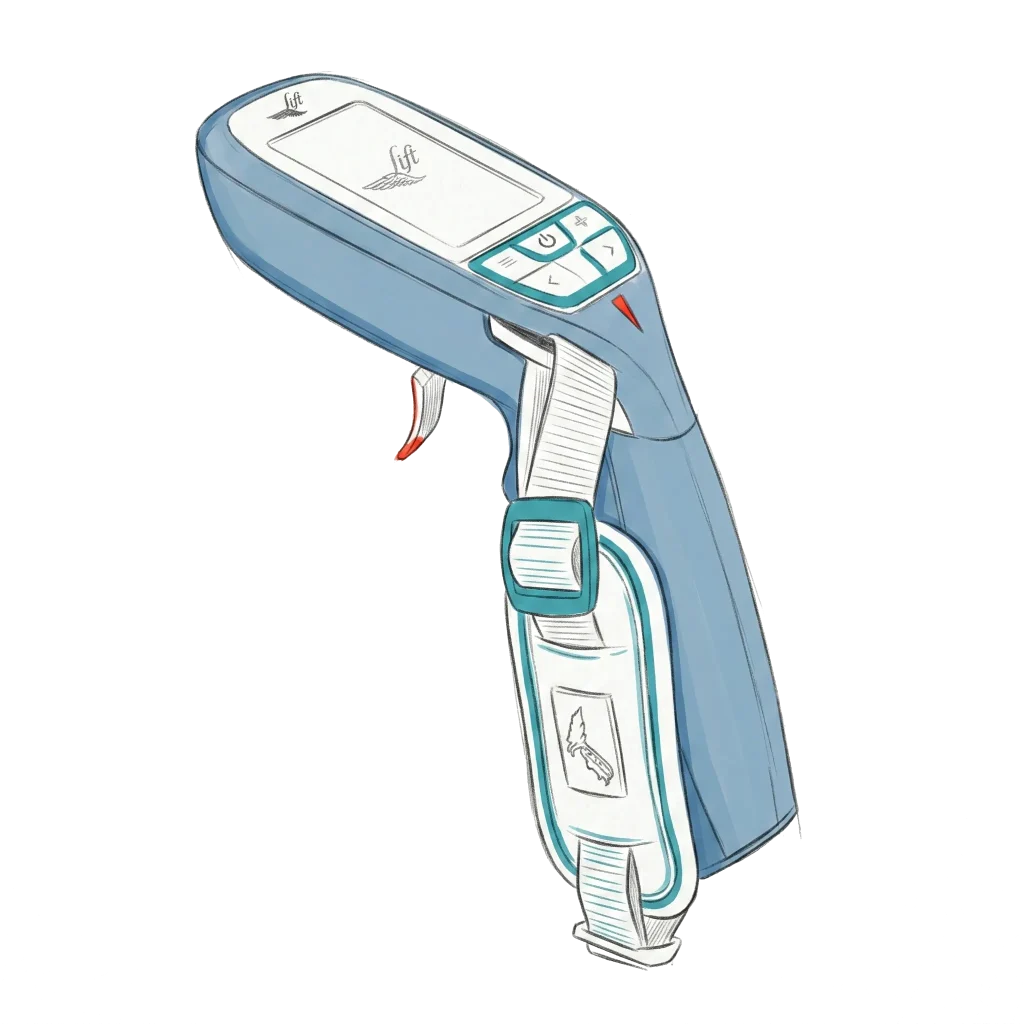
Hand controller. A wireless, waterproof, handheld device connected to the board via Bluetooth. The rider uses a proportional trigger to control motor speed. Controllers typically display battery level, speed, and ride metrics.
Hydrodynamic Lift
An eFoil’s front wing operates on the same physical principle as an aircraft wing. As the wing moves through water at speed, its shape and angle of attack deflect water downward, generating an upward force: lift. Because water is roughly 800 times denser than air, hydrofoil wings can be far smaller than aircraft wings while producing equivalent lift.
At rest and low speeds, the board sits on the water surface like a conventional surfboard. As the motor accelerates the board (typically to 8 to 12 km/h) the hydrofoil wing begins generating sufficient lift to raise the board, mast, and rider above the surface. This is sometimes called “getting on foil” or “takeoff.”
Once foiling, hydrodynamic drag drops significantly because only the mast, wings, and motor housing remain submerged. The board itself is entirely above the waterline, eliminating hull drag. This makes hydrofoil propulsion substantially more energy-efficient than conventional hull-based watercraft at equivalent speeds.
Most eFoils cruise between 20 and 35 km/h while foiling, with top speeds of 45 to 55 km/h depending on the model.
Propulsion and Power
eFoil motors are brushless permanent-magnet electric motors, chosen for their high efficiency, reliability, and resistance to corrosion when properly sealed. Two primary drive configurations exist:
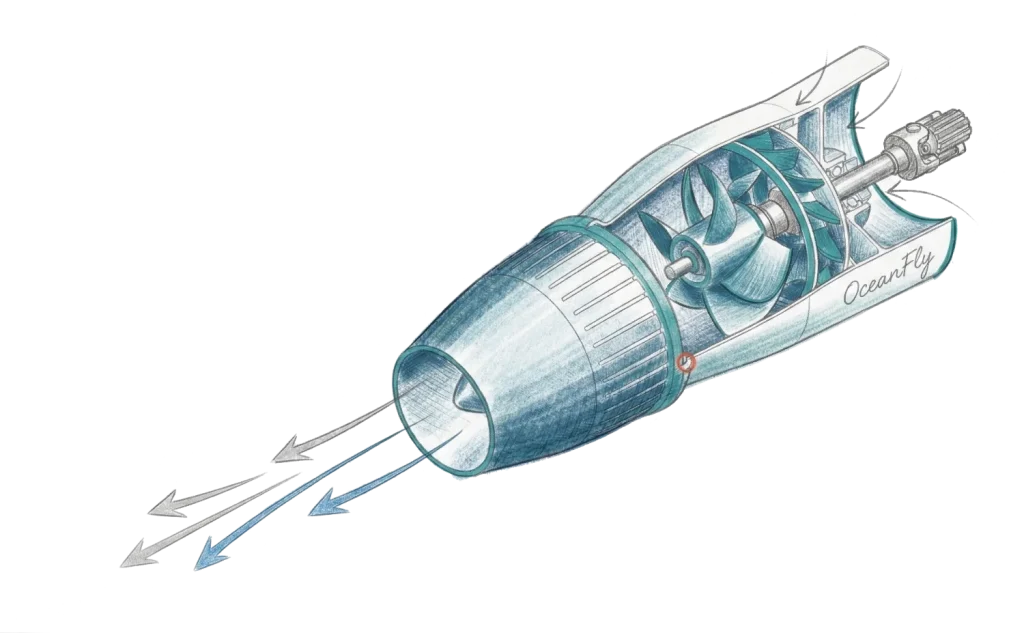
Propeller drive. A propeller (two or three blades) mounted directly or via a gearbox on the motor shaft. Some designs use folding propellers that collapse when the motor is off, reducing drag for unpowered wave riding.
Jet drive. An enclosed impeller system that draws water in and expels it rearward. Jet drives are generally quieter, safer (no exposed blades), and more resistant to debris, but slightly less efficient than open propellers.
Battery technology is the primary constraint on ride time and total system weight. Current eFoils use lithium-ion cells (typically NMC or similar chemistry). Batteries weigh 7 to 15 kg and are the heaviest single component. Charging times range from 1.5 to 3+ hours depending on charger output and battery capacity. Because lithium batteries are classified as dangerous goods for shipping, international transport of eFoils involves additional regulatory compliance (IMO, IATA, ADR declarations).
Control Systems
The wireless hand controller is the throttle. Bluetooth Low Energy (BLE) links controller and board. Most controllers offer speed modes: beginner modes limit top speed and acceleration; advanced modes open full power.
Safety features vary by manufacturer but commonly include: automatic motor cutoff when the rider’s magnetic safety leash disconnects, speed ramping to prevent sudden acceleration, and low-battery warnings. Some systems include GPS tracking and session logging.
Types of eFoils
By Construction
Hard boards use rigid composite construction, typically carbon fiber, fiberglass, or a combination. They offer the best performance characteristics: lowest weight, highest stiffness, and most precise handling. However, they are more susceptible to impact damage and less convenient to transport.
Inflatable and hybrid boards feature a rigid internal core surrounded by an inflatable outer shell. These boards are more portable (they can be partially deflated for transport), more impact-resistant, and generally more stable due to higher buoyancy. They trade some performance precision for convenience and durability.
By Rider Level
Beginner (80 to 130+ litres). High-volume boards with wide decks provide maximum stability. Their buoyancy makes it easier to balance while learning to stand and transition to foiling. Larger front wings are typically paired with these boards to generate lift at lower speeds.
Intermediate (60 to 80 litres). Reduced volume increases responsiveness and maneuverability. These boards suit riders who have mastered basic foiling and want to progress to carving turns and riding in varied conditions.
Advanced / performance (under 60 litres). Compact, low-volume boards designed for experienced riders. They allow aggressive turning, wave riding, and aerial maneuvers. Some models include footstrap inserts.
By Use Case
Cruising and recreation. The most common use case. Riders explore coastlines, lakes, and rivers at moderate speeds, often for 45 to 90 minutes per session.
Wave riding. Advanced riders use eFoils to motor out to wave breaks, then ride waves with the motor off or at minimal power. Folding propellers and compact drive systems reduce drag in unpowered mode.
Racing. A small but growing competitive discipline. Fliteboard hosted the first official international eFoil race, the Flite Cup, in 2021. Race-oriented boards prioritize speed, efficiency, and low drag.
Major Manufacturers
Several companies produce eFoils for the global market. The following are among the most widely recognized, listed in no particular order.
Lift Foils (Puerto Rico, USA). Founded in 2010 by Nick Leason. Lift began making hydrofoil surfboards before developing the first commercially launched eFoil in 2018. The company holds multiple patents related to eFoil component design. Its current product lines include the Lift5 and the LiftX hybrid platform. Lift manufactures in Puerto Rico.
Fliteboard (Byron Bay, Australia). Founded in 2016 by David Trewern. Fliteboard entered the market in 2018 and gained recognition for its integrated propulsion design, placing the motor in-line with the front wing. The company was acquired by Brunswick Corporation (NYSE: BC) in 2023 and operates within Mercury Marine. Its current range includes the Series 6 lineup spanning from inflatable AIR models to the performance ULTRA.
Waydoo (China). A manufacturer offering eFoils at lower price points than premium Western brands, making the sport more accessible in price-sensitive markets.
Takuma (France). A French company producing a range of foiling products including eFoils, with a presence in the European market.
SiFly (France/Europe). A European eFoil manufacturer focused on performance and design.
Awake (Sweden). Produces high-performance electric surfboards and eFoils with a focus on speed and power.
Learning to Ride
Typical Progression
Most eFoil instruction follows a staged progression:
- Prone riding. The rider lies on the board and uses the hand controller to move at low speed, learning throttle control and balance.
- Kneeling. The rider rises to a kneeling position while maintaining forward motion, practicing weight distribution.
- Standing. The rider stands up on the board while it remains on the water surface, building confidence with stance and steering.
- Foiling. With gradual throttle increase, the rider lifts off the water and flies on the hydrofoil. Learning to maintain stable altitude is the core skill of this stage.
Difficulty and Learning Curve
Compared to traditional surfing, which can take months or years to master, eFoiling has a relatively accessible learning curve. Most riders in an instructional setting achieve their first brief flight within one to three sessions. Board sports experience (surfing, snowboarding, skateboarding, wakeboarding) generally accelerates the learning process, but is not required.
The hand controller provides a significant advantage: the rider can precisely modulate speed, making it possible to learn at very low velocities before gradually increasing. This contrasts with wave-dependent sports where conditions dictate the pace.
Safety Considerations
Standard safety equipment includes a personal flotation device (PFD or impact vest) and a helmet, particularly during the learning phase. A magnetic safety leash connects the rider to the board; if the rider falls, the leash disconnects and the motor cuts off automatically.
Water depth is an important consideration. Riders need sufficient depth for the mast and foil assembly to operate without striking the bottom, typically a minimum of 1.5 metres, though more is advisable. Riding in shallow areas risks damage to the foil and potential injury.
Maintaining distance from swimmers, other watercraft, marine mammals, and fixed structures is essential. eFoils are nearly silent, which means other water users may not hear an approaching rider.
Regulations and Legal Status
Classification Challenges
eFoils occupy an ambiguous position in most maritime regulatory frameworks. They do not fit neatly into existing categories: they are not boats, not personal watercraft (PWC), not unpowered surfboards. Their electric motor makes them a powered vessel in some jurisdictions, while their surfboard form factor places them in recreational device categories in others.
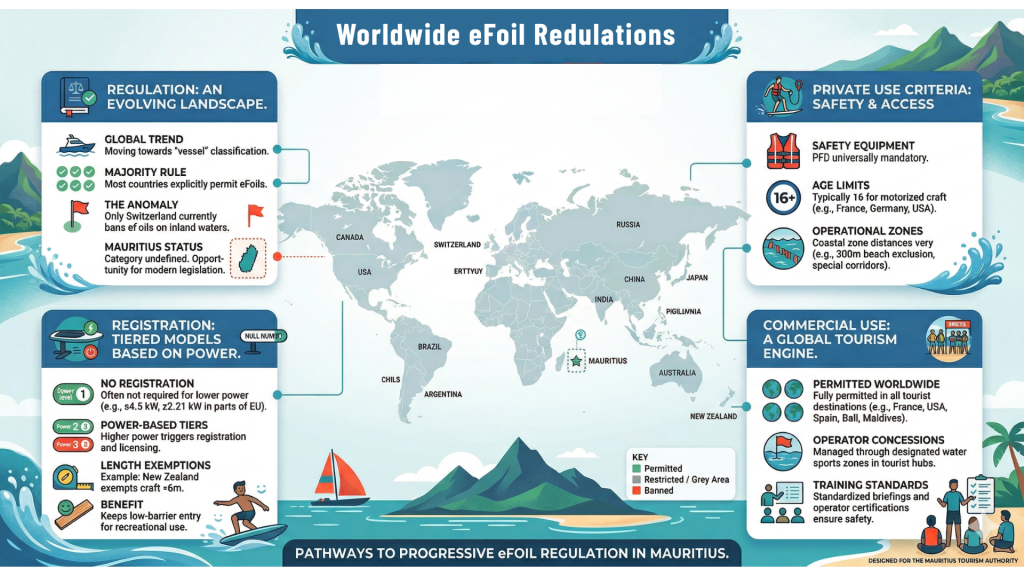
This ambiguity means regulations vary widely and are still evolving. Most countries treat eFoils as motorized watercraft subject to registration and licensing. Only Switzerland maintains an outright ban on inland waters, with the country’s top court upholding the restriction in 2024. The vast majority of tourist destinations permit commercial eFoil operations including lessons and rentals.
Regional Approaches
Europe
In France, eFoils under 4.5 kW do not require registration. They are classified as PNM (Plaisance Non Motorisée) with a maximum speed of 5 knots within 300 metres from shore, governed by Division 240 law.
In Germany, eFoils are classified as Kleinfahrzeuge (small craft) and require a license plate when motor power exceeds 2.21 kW. No operator license is needed under 15 HP (11.03 kW).
Switzerland is the only known jurisdiction with an outright ban. The Inland Navigation Ordinance prohibits motorized surfboards on inland waterways, and the top court upheld this in 2024.
Spain permits eFoils with a 200-metre exclusion zone from bathing areas. Portugal permits use with local variations and requires maritime insurance for rentals. Italy and Greece permit eFoils with 200 to 300 metre exclusion zones from beaches, and both have active rental operations. Croatia classifies eFoils as PWC, requiring a license, minimum age of 16, and mandatory insurance. In the Netherlands, eFoils do not currently fit existing registration categories, leaving their status in a grey area.
United States
The U.S. Coast Guard issued Policy Letter 01-22, classifying eFoils as vessels and requiring a PFD and engine cut-off switch. Individual states regulate further: Florida, Hawaii, and California all permit eFoils with standard vessel registration requirements (USCG Policy Letter 01-22).
Asia-Pacific
Australia permits eFoils under state-level registration frameworks. New Zealand permits eFoils and leads in certified commercial electric hydrofoil operations. South Korea has a framework in place via Standards for Electric-powered Ships (2020, revised May 2025). Japan has no specific eFoil regulations as of early 2026.
Tourist Destinations
Commercial eFoil operations (lessons, rentals, experiences) are well established in the UAE (Dubai), with multiple rental and training centers. The Maldives integrates eFoils into luxury resort offerings. Thailand has operations in Phuket, Koh Samui, and other tourist hubs. Indonesia (Bali) has multiple operators in Sanur, Canggu, and Nusa Dua. The Caribbean (BVI/USVI) offers rental services, and South Africa has commercial operations in Cape Town.
Mauritius
Electric-powered hydrofoil boards are not fully covered by existing Mauritius legislation. No specific provisions for eFoils exist under the Tourism Authority Act 2006 or current pleasure craft licensing frameworks. In 2023, an inquiry to the Tourism Authority confirmed that registration and licensing are not required for private recreational use. Because eFoils contain Bluetooth communication modules, they additionally require registration with the Information and Communication Technologies Authority (ICTA) as broadcasting devices. The Tourism Authority is reviewing the activity category, and an Innovative Activity licence application has been filed to establish a framework for supervised commercial eFoil experiences.
Common Restrictions
Where regulations exist, they typically address: designated no-go zones (swimming areas, marine reserves, port channels), speed limits near shore, minimum distance from swimmers and other vessels (commonly 200 to 300 metres from bathing areas), PFD requirements, and minimum operator age (typically 16 for motorized craft). Life jackets and engine cut-off mechanisms form the near-universal safety baseline internationally.
How regulation is trending
Most places that regulate eFoils treat them as motorized watercraft and allow commercial use under rules, rather than banning them. Where registration kicks in, thresholds are power-based: France 4.5 kW, Germany 2.21 kW, Australia (NSW) 4.0 kW. So far, jurisdictions that have looked at eFoil tourism have not prohibited it.
Environmental Considerations
Compared to Combustion Watercraft
eFoils produce zero direct emissions during operation. They generate no exhaust fumes, no fuel spills, and no combustion byproducts entering the water.
Noise output is minimal. While not entirely silent (the motor and propeller produce some sound transmitted through the water), eFoils are dramatically quieter than combustion-powered jet skis, motorboats, or personal watercraft. This makes them less disruptive to both wildlife and other people using the water.
Wake generation is negligible once the board is foiling, because the hull is above the water. Only the thin mast and small foil assembly pass through the surface. This contrasts sharply with conventional motorboats, which produce significant wake that can cause shoreline erosion and disturb anchored vessels.
Concerns
Battery production and disposal. Lithium-ion batteries require mining of lithium, cobalt, and other minerals, with associated environmental and social impacts. End-of-life battery disposal requires proper recycling to prevent toxic materials from entering landfills. Some manufacturers, including Fliteboard, have introduced battery recycling programs (Fliteboard launched a recycling program in the United States in 2022, a first in the eFoil industry) (Fliteboard: About Us).
Marine life disturbance. While quieter than combustion craft, eFoils may still affect marine animals sensitive to underwater sound or electromagnetic fields. The submerged foil assembly could potentially strike marine mammals or sea turtles in areas where these animals are present.
Reef and seagrass impact. If a rider loses control or rides in insufficiently deep water, the hydrofoil can contact and damage coral reefs, seagrass beds, or other sensitive benthic habitats. Responsible riding practices include maintaining adequate depth and avoiding ecologically sensitive areas.
eFoiling Locations Worldwide
eFoils can be ridden on virtually any body of water with sufficient depth and legal access. The ideal conditions are calm or lightly textured water, adequate depth (1.5+ metres), and a safe launch point.
Popular eFoiling regions include:
Hawaii. Consistent conditions, warm water year-round, and a strong surf culture have made the Hawaiian islands an early adoption hub.
Mediterranean. Coastal areas of France, Spain, Italy, Greece, and Croatia offer calm seas, warm temperatures, and an established water sports tourism infrastructure.
Caribbean. Protected bays, clear water, and a resort tourism economy support both private riders and eFoil experience operators.
Southeast Asia. Thailand, Indonesia, and the Philippines offer warm water, low costs, and growing water sports scenes.
Indian Ocean. Islands including Mauritius, the Maldives, and Seychelles provide protected lagoons, year-round warm water, and conditions suited to both beginners and experienced riders. Mauritius, with its extensive reef-protected lagoons and established water sports community, has seen growing eFoil adoption.
Gulf States. The UAE and Saudi Arabia have emerging eFoil scenes, supported by luxury tourism and calm coastal waters.
Great Lakes and inland waterways. In North America and Europe, freshwater lakes and rivers provide riding opportunities outside of coastal areas, often with fewer regulatory restrictions.
The key factors that make a location suitable for eFoiling are: water depth exceeding 1.5 metres, relatively calm surface conditions (though experienced riders handle chop and waves), legal access for powered watercraft, and a safe entry/exit point.
References
- Lift Foils, liftfoils.com
- Fliteboard, fliteboard.com
- Waydoo, waydoo.com
- Alexander Graham Bell National Historic Site, Parks Canada, HD-4 hydrofoil history
- Smithsonian National Museum of American History, HD-4 Hydrodrome model
- The Canadian Encyclopedia, “Hydrofoil” by Laura Neilson Bonikowsky
- KTH Royal Institute of Technology, EVOLO electric hydrofoil project (2009)
- Brunswick Corporation (NYSE: BC), Fliteboard acquisition announcement, 2023
- Fact.MR, Electric Hydrofoil Surfboards Market Report
- Cognitive Market Research, Electric Hydrofoil Surfboards Market
- MarketIntelo, eFoil Board Market
- Strategic Market Research, Electric Hydrofoil Boats Market
- USCG Policy Letter 01-22, eFoil vessel classification